

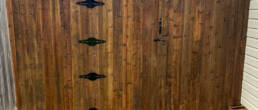
Wood and wrought iron are two of the most popular fencing materials for homeowners across North Texas, but they serve very different purposes. One prioritizes privacy and a classic look, while the other favors visibility and a more decorative, upscale style. Choosing between them depends less on which material is “better” and more on which one fits how you actually plan to use your fence. Both materials have been staples of residential fencing for generations, and both hold up well when installed correctly, so the real decision comes down to matching the material to your goals rather than picking a default. Here’s how the two compare across the factors that matter most.
Privacy vs. Visibility
The most fundamental difference between wood and wrought iron comes down to how much they block from view. A wood privacy fence is built with tightly spaced boards specifically to create a solid visual barrier, making it the clear choice for backyards, pools, and outdoor living spaces where seclusion matters. Wrought iron fencing takes the opposite approach, using open picket spacing that allows sightlines through the fence while still marking a clear boundary. This makes wrought iron a strong fit for front yards, where homeowners often want their landscaping and home visible from the street, or for properties where an open, welcoming feel matters more than full seclusion. Security works a bit differently for each material too. Wood fencing provides security largely through height and solidity, making it harder to see over or through, while wrought iron relies more on its strength and difficulty to climb or cut, even though it doesn’t block visibility the way wood does.
It’s worth noting that neither approach is inherently better, since the right choice depends entirely on the section of the property being fenced and what you want that boundary to accomplish. A pool area almost always calls for the privacy and safety benefits of a solid fence, while a front entry often benefits more from a design that lets the house and landscaping remain visible while still marking a clear boundary.
Wood Privacy Fencing: Strengths and Trade-offs
What Wood Does Well
- Provides full privacy, which is hard to match with any open-picket material
- Offers a warm, classic look that suits a wide range of home styles
- Costs less upfront than wrought iron in most cases
- Can be repaired board by board rather than replacing an entire section
The trade-off with wood is maintenance. Staining or sealing every few years helps protect against Texas sun and humidity, and individual boards may eventually need replacing as they age. For homeowners who want privacy and are comfortable with periodic upkeep, wood remains one of the most practical and cost-effective choices available.
Cedar and pine are the two most common wood choices in our area, and each brings a different balance of upfront cost and longevity. Cedar naturally resists rot and insects better than pine, which often makes it worth the higher initial cost for homeowners planning to stay in their home for many years. Pine costs less to start but typically needs more frequent sealing to reach a comparable lifespan, so the better choice often comes down to how much time you’re willing to spend on maintenance versus upfront savings.
Wrought Iron Fencing: Strengths and Trade-offs
 What Wrought Iron Does Well
- Adds a decorative, upscale look that pairs especially well with brick or stone homes
- Provides strong security without blocking sightlines
- Holds up for decades with a quality powder coat finish and minimal upkeep
- Pairs naturally with a matching custom driveway or walk gate for a cohesive entry
The main trade-off with wrought iron is that it doesn’t offer privacy, and it typically costs more upfront than wood due to material and fabrication costs. For homeowners prioritizing curb appeal, security, and long-term durability over full seclusion, wrought iron often justifies the higher initial investment.
Pairing wrought iron with a custom gate at the driveway or front walk is a common way to carry the same decorative style across the entire entry point rather than stopping at the fence line itself. Many homeowners find that a matching gate and fence combination has a bigger visual impact than either element on its own, since it creates a cohesive first impression from the moment someone approaches the property.
Cost and Maintenance Differences
Wood generally costs less to install initially but requires more ongoing attention to look its best over time. Wrought iron costs more upfront but needs comparatively little maintenance once installed correctly, since a quality powder coat finish resists rust and holds its appearance for years with only occasional touch-ups. When comparing the two, it helps to think beyond the initial price and consider the full cost of ownership over ten or fifteen years, factoring in staining, board replacement, or touch-up coating along the way. Depending on how long you plan to stay in the home, one material may end up being the more economical choice even if it costs more at the outset.
Repair costs also differ meaningfully between the two materials. A damaged wood board is typically a straightforward, inexpensive fix, since a single board can usually be replaced without disturbing the rest of the fence. Wrought iron repairs, particularly anything involving a bent or damaged panel, often require a bit more specialized work, though the trade-off is that wrought iron rarely needs this kind of repair in the first place when installed and finished properly.
Resale value is another angle worth considering, even if you’re not planning to sell anytime soon. Wrought iron’s upscale appearance and low maintenance needs can be an appealing feature to future buyers, while a well-maintained wood privacy fence signals to buyers that the backyard offers usable, private outdoor space. Neither factor should be the sole reason for choosing a material, but both are worth keeping in the back of your mind as you weigh the decision.
Which Fits Best for Your North Texas Property
For many properties throughout Collin County, the decision comes down to which part of the property is being fenced. Backyards and pool areas tend to favor wood for the privacy it provides, while front yards and entry points often look and function better with wrought iron, since it maintains an open, welcoming feel from the street. Some homeowners in growing communities choose both, using wrought iron along the front of the property paired with a matching custom gate, then switching to wood privacy fencing along the sides and back where seclusion matters more. This combination approach lets a single property take advantage of what each material does best.
Climate is worth factoring in regardless of which material you lean toward. Both wood and wrought iron perform well in North Texas when finished properly, but each needs a different kind of upkeep to handle our summer heat and occasional severe weather. Wood needs a finish that resists UV fading and moisture damage, while wrought iron needs a quality powder coat that resists rust through humid stretches and holds up through the occasional winter freeze. We’ve installed both materials throughout Rockwall County and the surrounding communities, and we factor local weather into every material recommendation so your fence performs well for years, not just on installation day.
Lot size and layout also play into the decision more than homeowners sometimes expect. A smaller suburban lot with a compact backyard might lean toward wood throughout for maximum privacy on a limited footprint, while a larger property with more separation between the home and the street might have more flexibility to use wrought iron along a longer front stretch without sacrificing much privacy where it actually matters.
Matching Material to Your Home’s Style
Beyond privacy and cost, the visual pairing between fence material and home style is worth thinking through carefully. Wood tends to complement traditional, craftsman, and farmhouse-style homes especially well, offering a warm, natural look that fits a wide range of siding colors and architectural details. Wrought iron leans more upscale and tends to pair best with brick, stone, or stucco exteriors, where its detailed scrollwork and clean lines echo the more formal character of the home. Neither material is limited strictly to these pairings, but starting with your home’s existing style is a useful way to narrow down design options before getting into specific board patterns or picket styles.
Questions to Ask When Comparing Styles
- Does your home’s exterior lean more traditional or more upscale and formal?
- Do you want the fence to blend into the landscaping or stand out as a design feature?
- Are you fencing the whole property or just a specific section, like a backyard or front entry?
- Would a combination of both materials better suit different parts of your property?
Walking through these questions before finalizing a design tends to lead to a more satisfying result than choosing a material based on price alone.
Comparing Your Options
Before deciding between wood and wrought iron, consider the following:
- Choose wood if privacy is the top priority for your space
- Choose wrought iron if you want a decorative look that keeps sightlines open
- Factor in long-term maintenance, not just upfront cost, when comparing the two
- Consider using both materials in different areas of the same property
There’s no universally correct choice here. The right material depends on how each part of your property is used and what matters most to you as the homeowner.
Let Us Help You Choose the Right Fence
Our team has installed both wood and wrought iron fencing throughout Collin County and the surrounding North Texas area, and we’re glad to walk through the trade-offs specific to your property and goals. We’ll look at how you plan to use each part of your property, talk through your budget and style preferences, and give you an honest recommendation on which material, or combination of materials, makes the most sense for your home. Schedule a consultation with 326 Construction, and we’ll help you decide on a material that fits your home for years to come.
Ready for an expert opinion? Get in touch today!
Get practical tips, project ideas, material comparisons, and expert guidance from the 326 Construction team. Whether you’re planning a new privacy fence, custom patio, or metal building, our articles help you make informed decisions for your North Texas property.
Like this article? Spread the word!
Related Posts
Wood Fence Pricing 101: What Drives the Cost Up (or Down) in Texas
Learn what drives wood fence cost up or down in Texas, from cedar grade to height, style,…

How to Prepare Your Property for a New Fence Installation
Planning a new fence? See how to prepare your property, from checking permits to clearing…

Custom Wrought Iron Fencing in Rockwall County, TX | 326 Construction
Expert custom wrought iron fencing in Rockwall County, TX from 326 Construction. Durable,…